
- 0xdurakiHeadlight Switch Connector Pinouts
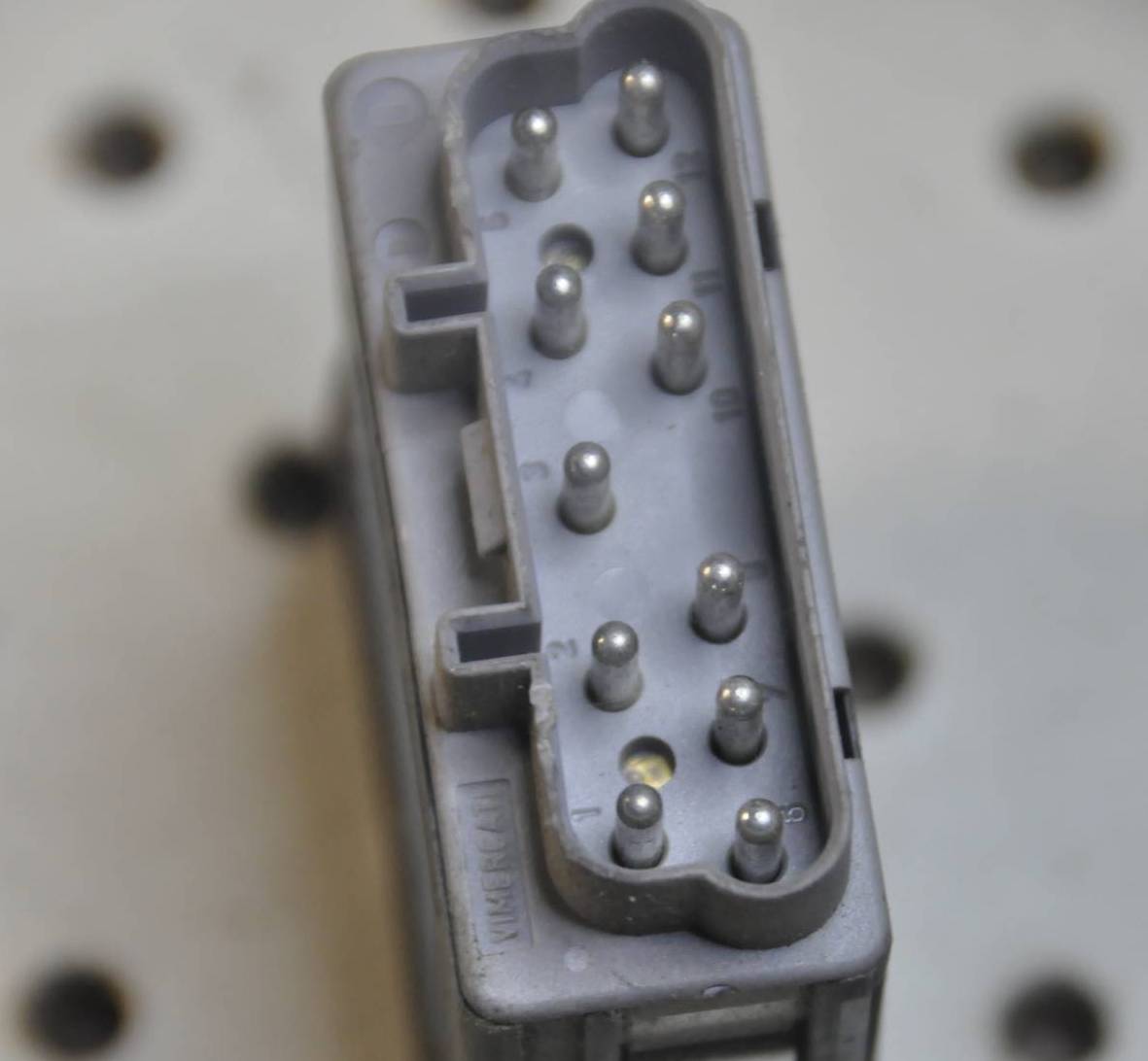
I first stumbled upon the so-called “Vimercati” connector, in a BMW E34 Headlight Switch, presumably, also found in other older BMW models - while I was working on Interior LED lighting replacement.
This connector is sometimes also called NSW connector switch, and its original part no. ID is 8 351 235.1, with its internal Vimercati ID Code 549.3340.11. Below is a photo showing how this connector looks like.
Below are pinouts for two separate switches:
- Pinouts for Light Switch
- Pinouts for Cluster Dimmer
 DD BMW 61318351235.1 Vimercati Connector
 BMW Fog/Light Switch - containing Vimercati Connector
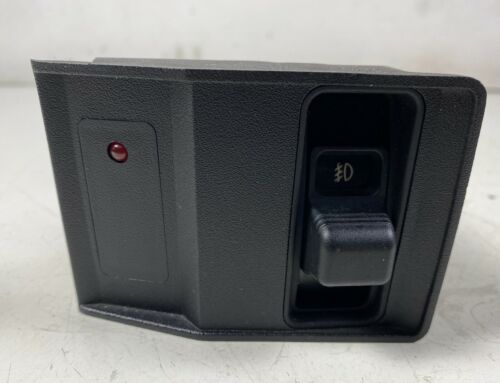
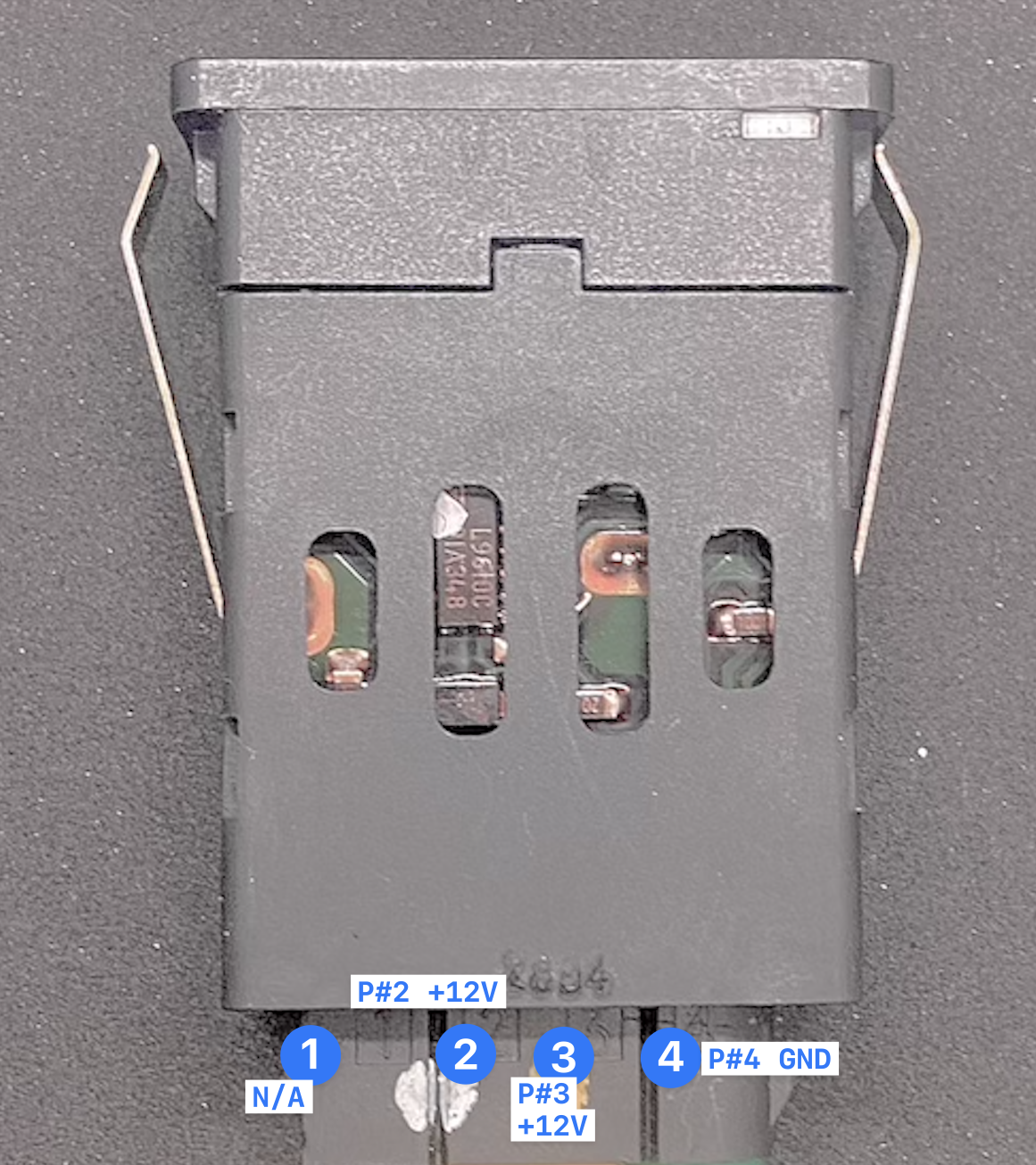
Besides, on my LAB Vehicle 🚙, the plastic Light Switch contains a tachometer cluster dimmer, unlike the above example containing only an LED on a piece of plastic. The dimmer switch has 3 pins, which corresponds to those of typical variable potentiometer - high (Vin+), low (Vout-), and resistance value.
Pinouts for Light Switch
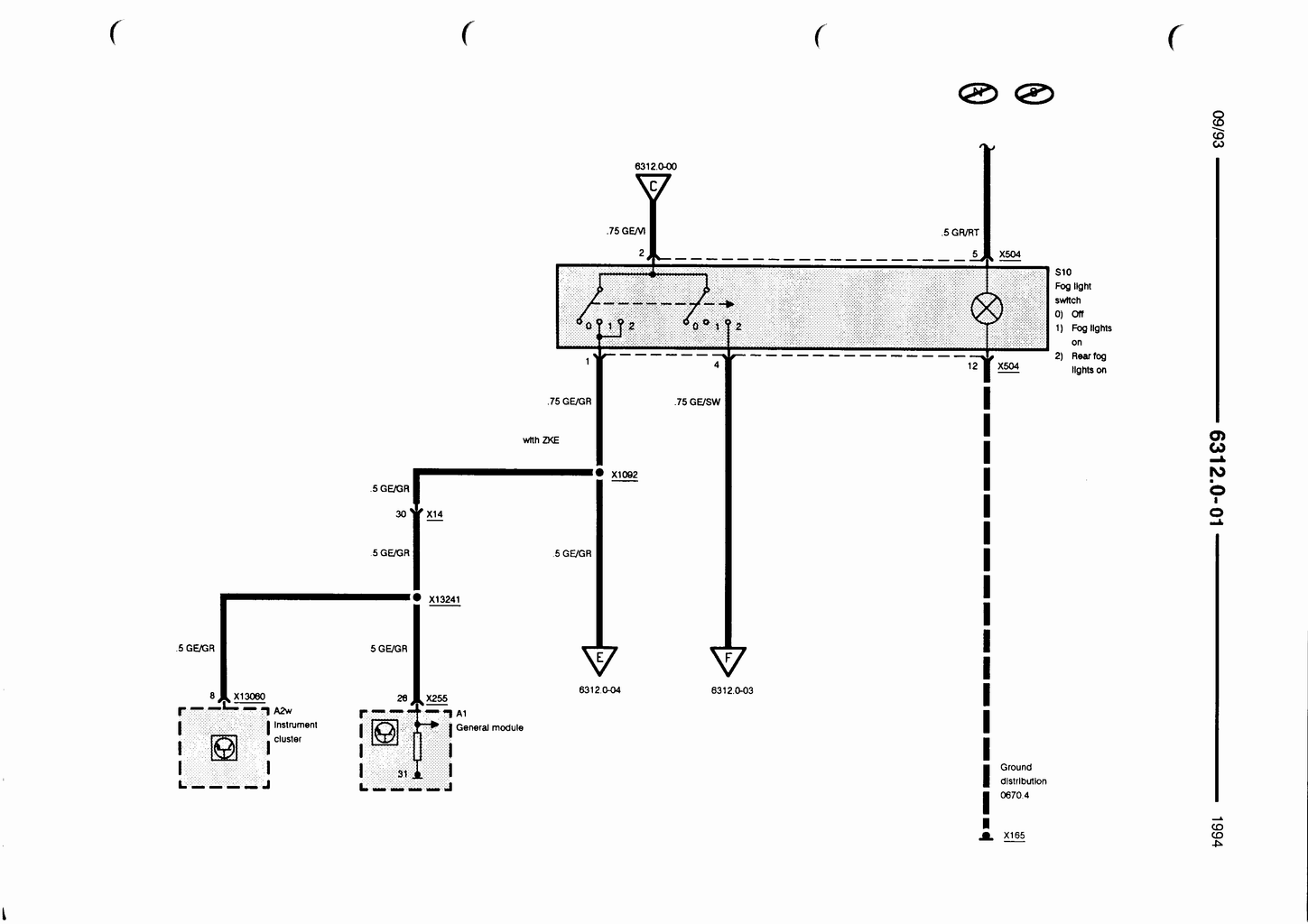
Looking at the BMW E34 scheme diagrams in ‘Electrical Troubleshooting Manual’, a light switch is described in Plan 6 (6312.0-01) referencing buslines;
 Fog Light-switch (by Vimercati) Scheme Diagram (6312.0-01)
Important Errata
Based on above, we can therefore conclude the pinouts for the component S10 “Fog light switch”, as following:
Connector Pin 2 and Pin 5 lead to a component 6312.0-00 which provides current from towards the Pin 2 - note that the arrow triangle “C” means current flowing path (downwards).
The wavy line on Terminal Pin 5 indicates continuation of the line, presumably from Pin 2 busline.
Connector Pin 1 is described as a circuit reference line for connection to another circuit. For the BMW “ZKE” supported models, the line is leading to A2w Instrument cluster circuit, and also to General Module (GM).
Connector Pin 4 is described as a current flow passed to component 8312.0-03.
Connector Pin 12 is described as a ground distribution designation, ie. the S10 switch is turned off.
Pinouts
| Pin No.# | Type | Description |
|---|---|---|
| Pin 1 | +12V | Positive Terminal (+) |
| Pin 2 | +12V | Positive Terminal (+) |
| Pin 3 | UNKNWN | N/A |
| Pin 4 | To circuit LBL 63120-03 | Current Flow |
| Pin 5 | +12V | Positive Terminal (+) |
| Pin 6 | UNKNWN | N/A |
| Pin 7 | UNKNWN | N/A |
| Pin 8 | +12V | Positive Terminal (+) |
| Pin 9 | NOT_USED | NOT_USED |
| Pin 10 | UNKNWN | N/A |
| Pin 11 | UNKNWN | N/A |
| Pin 12 | GND | Ground Distribution |
| ✮ |
Test Bench
Pinouts for Cluster Dimmer
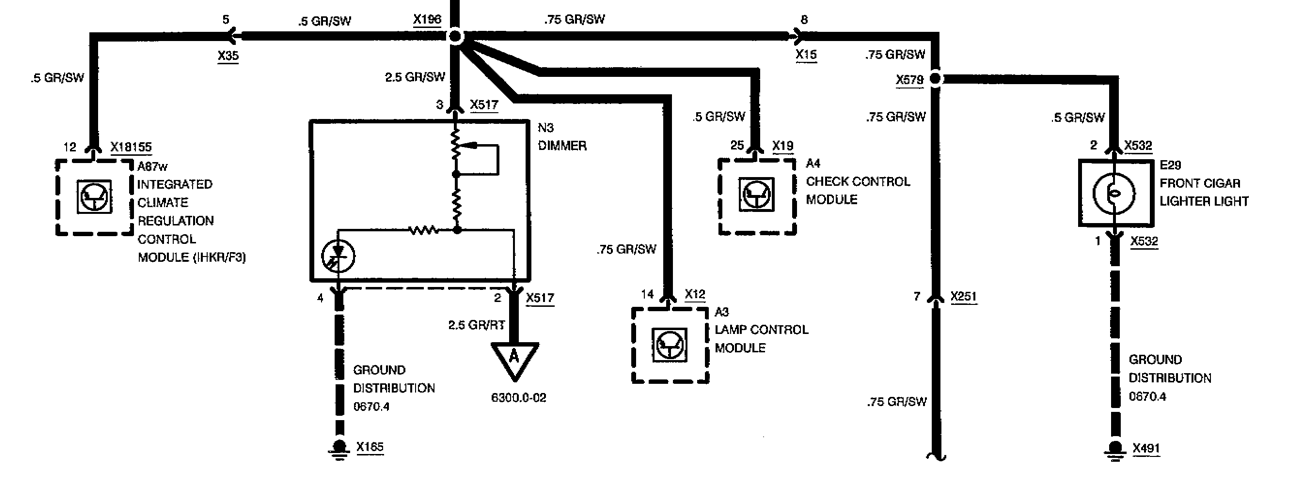
We can reference to BMW E34 scheme diagrams again to identify jointed circuit on light switch, that describes so called “N3 Dimmer” component. I’m using MY.‘95 Wiring Diagram Schemas which disclose these details at schematics 6300.0-00.
 N3 Dimmer (by Vimercati) Scheme Diagram (X517/6300.0-00)
As seen aboce, there are three wires (or pins) on N3 Dimmer connector (No. X517), which contains the following pin assignments:
Pinouts
| Pin No.# | Type | Signal | Description |
|---|---|---|---|
| 1 | N/A | (Empty/No Pin) | N/A |
| 2 | E | +12V | Positive Terminal (+) |
| 3 | E | +12V | Positive Terminal (+) |
| 4 | M | GND | Ground Distribution |
| ✮ |
Test Bench
Although the X517 connector on N3 Dimmer contains casing shell for 4 pins, the Pin 1 does not exists, and only contains empty space. The pins labeled Pin 2 and Pin 3 are positive terminals (12V+), whereas the last Pin 4 is a Ground Terminal.
In fact, the Pin 2 is used to control potentiometar inside the N3 Dimmer, and its calculated via base high voltage (Vin+) and base low voltage (Vin-) - by substracting the value of the Pin 3.
 N3 Dimmer Pinouts